
Loading...
Serving Sparks, NV and surrounding areas. (775) 510-0154
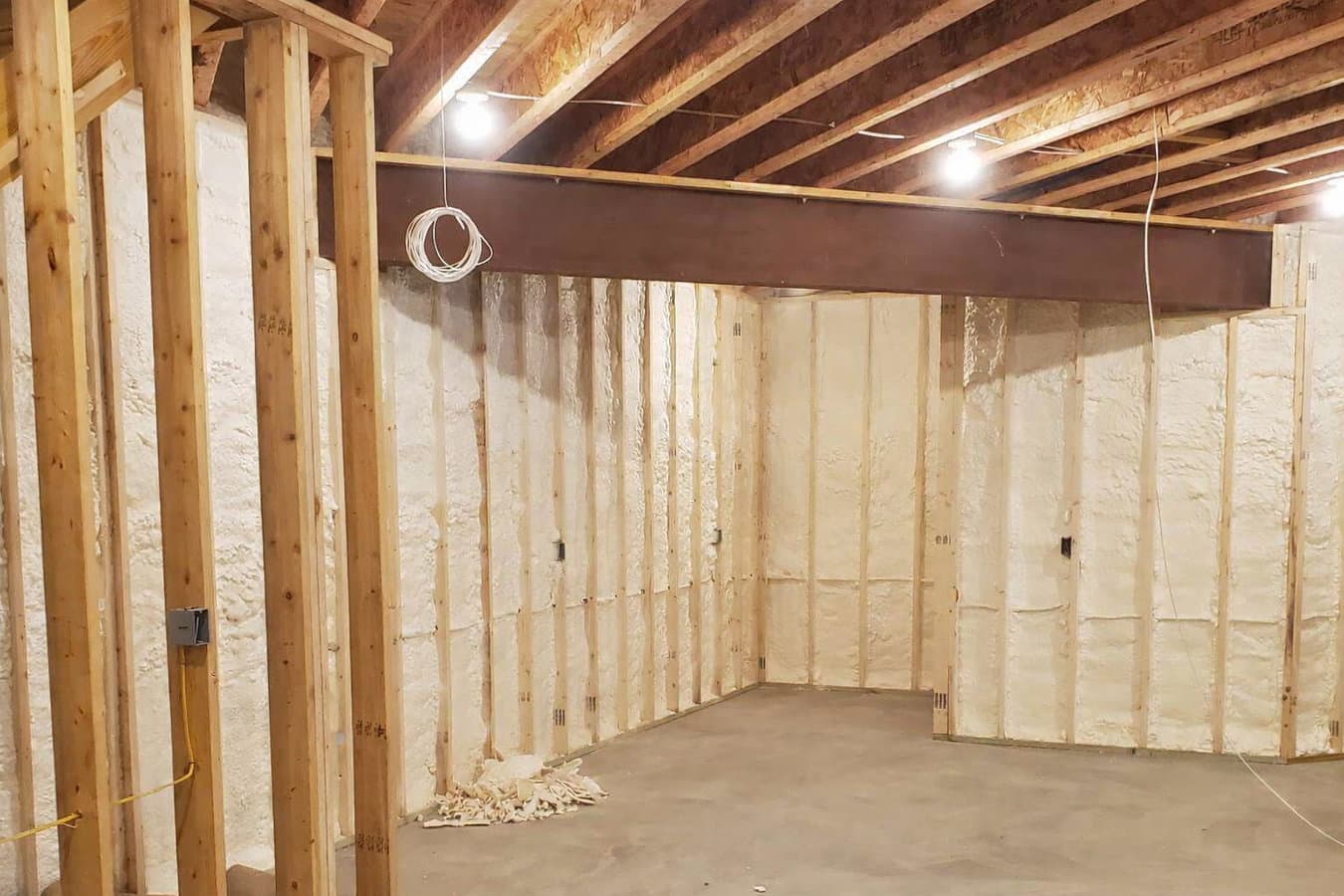
Cold floors, climbing heating bills, and a basement that was built before modern energy codes were the standard - proper basement insulation fixes all three and makes your whole home more comfortable year-round.
Basement insulation in Sparks, NV creates a thermal barrier between your living space and the cold ground or outside air surrounding your foundation - most jobs on an average-sized home are completed in one to two days, with comfort improvements noticeable within the first heating or cooling season.
Without it, heat escapes through your basement walls and floor in winter, and your air conditioning bleeds out the same way in summer. Sparks sits at roughly 4,400 feet elevation and sees temperature swings from below freezing in January to over 100 degrees in July. That range means your basement insulation is working in both directions all year, and gaps in coverage show up on your NV Energy bill every month.
Basement insulation and air sealing work best as a package. Before new material goes in, gaps around pipes, wiring, and the rim joist need to be closed so air cannot bypass the insulation entirely. If moisture or old material needs to be addressed first, our crawl space insulation and closed-cell foam insulation services address those conditions directly.
Walk barefoot across your kitchen or living room floor on a January morning in Sparks. If it feels significantly colder than the rest of the room, the basement ceiling below is not holding heat well enough. Overnight lows can drop into the teens here, and an uninsulated basement ceiling acts like a cold surface pulling warmth out of your living space from below.
If you turn the thermostat up but the main floor still feels drafty near ground level, heat is escaping through uninsulated or degraded basement walls. This pattern is common in older Sparks neighborhoods like Wingfield Springs and the areas east of McCarran Boulevard, where many homes were built to minimal energy standards.
In Sparks's desert climate, gaps around basement pipes, wiring, and the rim joist let outside air infiltrate your home. You might notice unusual dryness, dust, or a faint smell even in dry conditions. These are exactly the penetrations where insulation and air sealing work together to make a real difference.
A large share of Sparks homes built during the 1970s through early 1990s were constructed under energy codes that allowed very minimal basement insulation. If your home falls in that range and has never been assessed, there is a strong chance it is performing well below current standards. The age alone is a reasonable trigger for an inspection.
We insulate basement walls, the ceiling above unfinished basements, or both, depending on how you use the space and what your home actually needs. For unfinished basements used mainly for storage or utilities, insulating the ceiling keeps heat in your living area without conditioning the whole lower level. For finished or semi-finished basements, insulating the walls makes the space comfortable throughout the year.
Spray foam is a strong choice for Sparks basement walls because it seals air gaps and insulates in one step, which matters in a climate with temperature swings this wide. Rigid foam board is another effective option, especially when paired with air sealing at the rim joist. Fiberglass batts work well in the ceiling above an unfinished basement where the framing is accessible and dry. Our closed-cell foam insulation service covers spray foam applications for basement walls and rim joists in detail.
Before any new material goes in, we address air leakage at the rim joist, around pipes and wiring, and along the top of foundation walls. Skipping this step leaves the most significant heat pathways open and means the insulation you pay for never delivers its rated performance. For homes with moisture concerns or old contaminated material, we handle removal and remediation before the new installation begins. Our crawl space insulation service handles the adjacent lower-level space the same way.
Spray foam or rigid board applied to foundation walls - best for finished basements or spaces you use as living areas.
Batts or blown-in material between floor joists above an unfinished basement - keeps heat in your main living space without conditioning the lower level.
The framing junction where your floor meets the foundation is one of the biggest sources of heat loss in older Sparks homes.
Old, degraded, or contaminated insulation removed and disposed of before new material is installed - the right foundation for a lasting result.
Sparks sits in the Truckee Meadows at about 4,400 feet and sees a temperature range that few metro areas match. January overnight lows regularly drop into the teens while July afternoons push past 100 degrees. That means your basement insulation is not a seasonal concern, it is a year-round one. The same gap in your foundation wall that lets heat escape in winter lets cool air bleed out in summer, and your NV Energy bill reflects both.
A large share of Sparks homes were built during the post-casino-boom growth era of the 1970s through 1990s, when energy codes allowed very minimal basement insulation. Many of those homes have little or no wall insulation, and what exists may have degraded over 30 to 50 years of the desert climate. If your home was built before 1995 and has never had an energy assessment, there is a good chance a contractor will find meaningful gaps. The U.S. Department of Energy notes that insulating and air-sealing the basement and crawl space can cut total home energy costs by up to 15 percent, and Sparks homeowners tend to see results toward the higher end of that range because the climate demands so much from the system year-round.
We serve Sparks and the surrounding metro, including Reno, Dayton, and Carson City. The high-desert climate and 1970s-to-1990s housing stock are consistent across the region, and the solutions we use in Sparks work just as well in those neighboring communities.
We respond to every inquiry within 1 business day. We will ask a few questions about your basement size, whether it is finished or unfinished, and any moisture or pest history. The estimate visit is free and carries no obligation.
A technician walks through your basement, looks at existing insulation, checks the rim joist and any penetrations, and notes anything that needs to be addressed before new material goes in. You receive a written estimate that itemizes the scope and cost - no vague totals.
Move stored items away from the perimeter walls and make sure the crew has clear access to the ceiling joists if we are insulating above. This is the main thing you are responsible for - the crew handles everything else on installation day.
Most Sparks basement jobs are completed in one day. Before the crew leaves, walk through the finished work with the lead installer so you can see the coverage yourself. If a permit was required, the contractor handles the inspection scheduling - you do not need to manage that step.
Free on-site estimate. Experienced Nevada contractor. We reply within 1 business day.
(775) 510-0154From Sparks and Reno to Fernley, Carson City, and beyond, we cover the full regional market. That reach means we understand how local soil conditions, climate zones, and housing eras differ across the valley - and we bring that knowledge to every job.
Our crews insulate basements across the Sparks area, so we know how the high-desert climate and local construction affect these spaces. We document the work we complete and put the scope in writing before we start, so you always know what you are paying for.
Some basement insulation projects in Sparks trigger a building permit requirement. We handle the permit pull, coordinate the inspection, and make sure the work is on record. That documentation protects your investment when you sell the home.
Many Sparks homeowners qualify for a cash rebate through NV Energy's efficiency program when they upgrade basement insulation to qualifying standards. We know which materials and installation methods qualify and can help you submit the paperwork so you do not miss money that is available to you. The program details are on the NV Energy website.
Sparks homeowners choose us because the work is predictable from the first call to the final walkthrough. You get a written estimate before anything starts, a clear explanation of what is included, and a crew that does not leave until you have seen the finished installation yourself.
The highest-performance insulation option for Sparks basement walls and rim joists, combining thermal resistance and moisture resistance in a single application.
Learn moreInsulation and air sealing for the crawl space beneath your home, paired with vapor barrier options to address the adjacent lower-level thermal envelope.
Learn moreContractor schedules fill quickly before winter - lock in your assessment date now and stop losing heat before the cold sets in.